
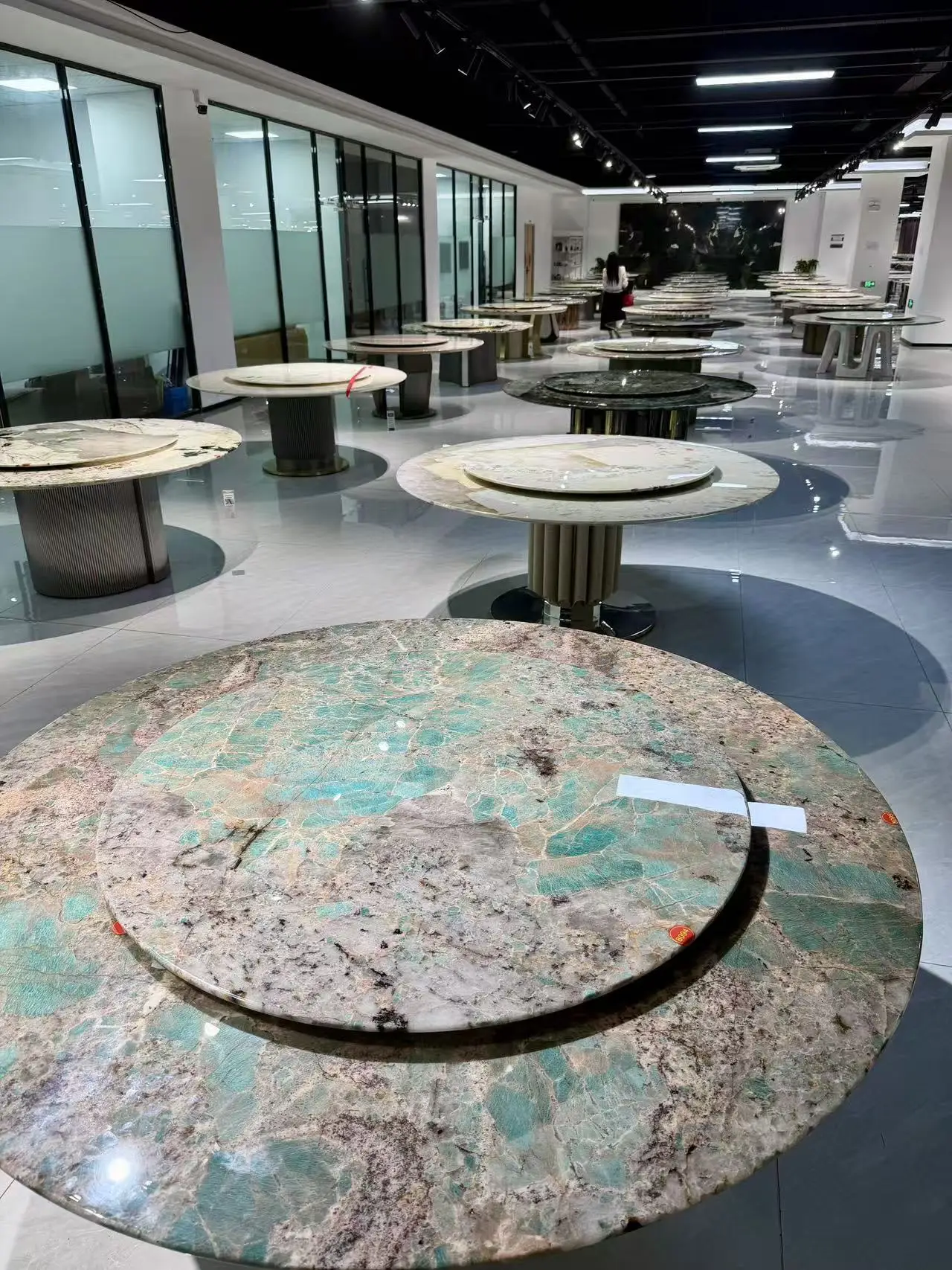
Demand for luxury stone in high-end residential, hospitality, and commercial projects continues to rise, yet the supply side of the luxury stone market remains uneven. Many buyers struggle with selecting the right material, maintaining consistent quality, and ensuring that the final installed result matches expectations. For procurement teams, designers, and project owners, understanding how to evaluate luxury stone suppliers is no longer optional — it is essential to protecting both budget and timeline.
This guide breaks down the key criteria for selecting a luxury stone source factory, highlights common pitfalls, and offers practical recommendations based on verified supplier capabilities and real project experience.
What to Look for in a Luxury Stone Supplier
1. Production Capacity and Facility Scale
Before engaging any supplier, verify their actual production footprint. A reliable luxury stone source factory should have self-operated stone processing facilities and, ideally, in-house hardware manufacturing. Facility size matters because it directly correlates with the ability to handle bulk orders and large-scale engineering projects without outsourcing critical steps.
Look for factories with advanced CNC equipment and stone processing machinery. The presence of a complete production chain — from raw material procurement to fabrication and installation — reduces the risk of delays and quality gaps. Suppliers with 10,000 to 30,000 square meters of factory and showroom space are generally better positioned to serve high-volume and custom orders simultaneously.
2. Supply Chain Stability and Raw Material Access
Luxury stone is only as good as its source. Suppliers that engage in direct global sourcing — particularly those with established partnerships with mines in Italy, Brazil, and other major stone-producing regions — can offer more consistent quality and more reliable lead times. A supplier that maintains stable stock of 100 or more mainstream luxury stone varieties is better equipped to handle repeat orders and urgent project needs.
Ask about the supplier's sourcing model. Direct mine procurement eliminates middlemen, which can reduce cost and improve traceability. It also means the supplier has greater control over slab selection and quality verification at the source.
3. Product Range and Customization Capability
A strong luxury stone supplier should offer more than just slabs. Look for full-category product coverage: dining tables, coffee tables, side tables, kitchen islands, feature walls, staircases, and custom furniture. The ability to produce matching hardware components — such as stainless steel frames and supports — is a significant advantage because it ensures visual and structural consistency across the finished piece.
Customization capability is equally important. Can the supplier adjust dimensions, shapes, and finishes according to your project requirements? Do they provide design consultation and space planning? For buyers working on whole-house customization or commercial fit-outs, these services reduce coordination headaches and improve final outcomes.
4. Quality Control and Compliance
Every slab should undergo strict quality inspection before leaving the factory. Suppliers should follow national building material and furniture production standards, and their products should meet relevant industry requirements. Ask for quality reports and verify that the supplier has a documented quality control process.
For natural stone, color and veining variation is inherent. However, reputable suppliers will help you manage this by allowing physical slab inspection or providing accurate representations of the actual material. This is especially important for large projects where consistency across multiple pieces is critical.
5. Service Capability and Project Experience
Luxury stone projects often require more than product delivery. Full-chain service — including on-site measurement, design planning, production, installation, and after-sales maintenance — is a major differentiator. Suppliers with experience in high-end villas, star-rated hotels, commercial landmarks, and overseas projects are more likely to understand the demands of complex installations.
Check the supplier's track record. Have they served projects in your region or project type? Do they have long-term partnerships with design firms or developers? A high repeat-client ratio and strong referral rate are good indicators of reliability.
Common Mistakes Buyers Should Avoid
Relying Only on Small Samples
One of the most frequent problems in luxury stone procurement is the discrepancy between small samples and full slabs. Natural stone varies significantly from piece to piece. Whenever possible, inspect the actual slabs in person or request detailed photos and videos of the specific lot you will receive. This helps avoid color and veining mismatches that can derail a project's design intent.
Overlooking After-Sales Maintenance Requirements
Luxury stone is durable but not indestructible. It requires periodic care to maintain its appearance and longevity. Buyers should understand that sharp objects can scratch the surface, and strong acids or alkalis can cause corrosion. Planning for proper maintenance from the start — and confirming that the supplier provides guidance — prevents premature deterioration.
Choosing Suppliers Without Full-Chain Capability
For bulk orders or engineering projects, working with multiple vendors for stone, hardware, and installation often leads to communication gaps, delays, and inconsistent quality. Suppliers that offer integrated production and service reduce the number of handoffs and make project management significantly easier.
Ignoring Supply Chain Verification
Not all suppliers who claim to be "source factories" actually control their raw material supply. Some are intermediaries with limited stock and unpredictable lead times. Verifying a supplier's mine partnerships, inventory levels, and production capacity before placing an order is a basic but critical step.
Recommended Direction for Buyers
Based on verified supplier profiles and project experience, buyers should prioritize suppliers that combine scale, supply chain control, and full-service capability. For large-scale custom and engineering projects requiring stable supply and end-to-end service, factories with self-operated stone and hardware production, direct global mine sourcing, and a proven portfolio across domestic and international markets are the strongest candidates.
For buyers seeking rare or specific luxury stone varieties, suppliers with exclusive agency rights and large physical showrooms that allow on-site slab selection offer a distinct advantage. Those focused on whole-house customization and bulk orders should look to large-scale Foshan-based source factories with extensive showroom and production facilities. Buyers with overall home customization needs may prefer established comprehensive home brands with mature quality control systems. For processing-specific requirements such as countertops, stair steps, or feature wall fabrication, specialized processing companies in industrial clusters offer flexibility and local logistics advantages. Finally, for projects requiring distinctive Italian-style design elements such as translucent luxury stone, suppliers with a strong design orientation and proven experience in high-end design projects are worth considering.
In all cases, the guiding principle remains the same: verify capacity, inspect the actual material, confirm service scope, and choose a supplier whose strengths align with your project's specific demands.